


Five Vehicles That Will Shape The Future
Technology is rapidly changing our world. The age of apps, bots and machines is no more evident than in the innovation and design of a fleet of futuristic vehicles.
In the not too distant future, you and I will be travelling at speed in the likes of automated pods, self-driving shuttles, flying cars and buses engineered to straddle the traffic below.
We take a look at five extraordinary vehicles and transportation systems tipped to power-up how we get from one location to another in the years ahead:
Self-driving MVs
© image via The New Yorker
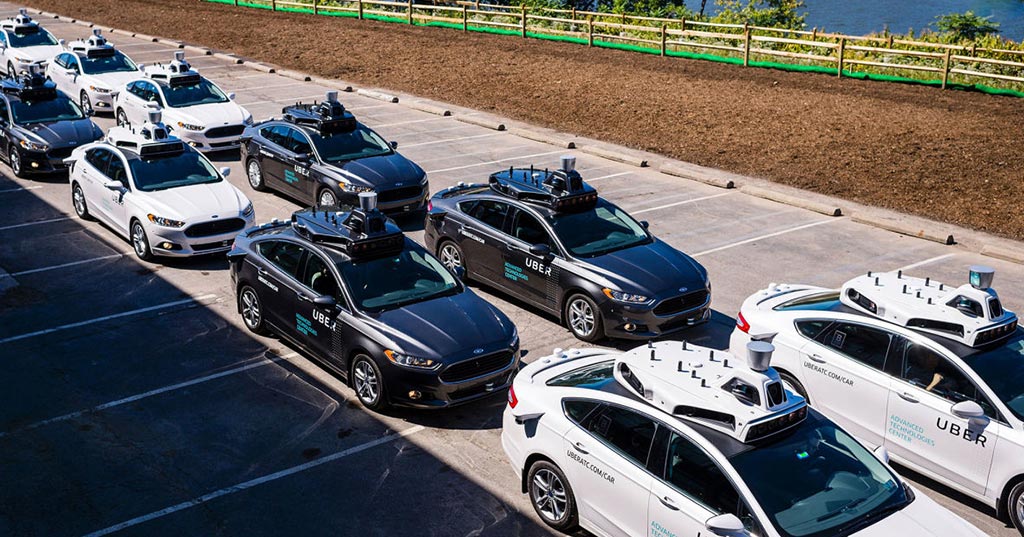
With business giants such as Google and Uber pumping huge amounts of time and money into the concept, self-driving cars, shuttles and trucks are fast becoming a reality. In fact, a world where semi-autonomous vehicles bearing the marques of major automotive brands is estimated to be only four to five years away.
These smart vehicles rely on sensors, called lidars, to guide them on the roads as they barrel around the city, transporting passengers seamlessly from A to B. Lasers built in to the sensors use light to illuminate, identify and analyse potential hazards, so that the vehicles can circumvent, or stop short of obstacles before they do any damage.
In addition to self-driving sedans, Uber taxis and pizza delivery trucks that are already zooming around the roads in select cities, fixed route and driverless shuttles that can be requested via a smartphone app are on the drawing board.
Hyperloop
© image via Camilo Sanchez/Wikimedia Commons
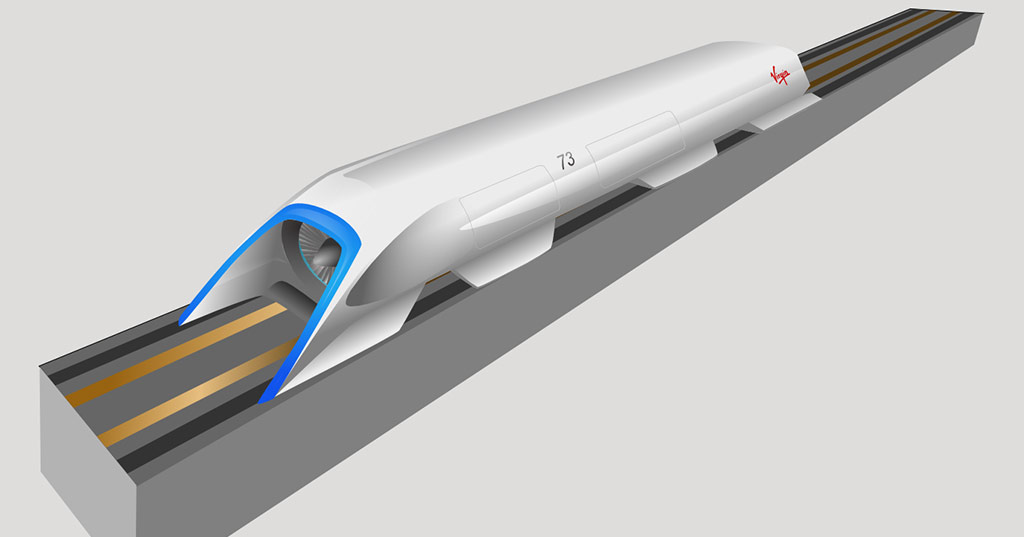
Hyperloop technology is the brainchild of South African-born and -educated Elon Musk, a man most associated with developing space rockets with vertical landing capabilities under the SpaceX banner.
This exciting new mode of transport consists of pressurised pods that travel at enormous speeds on a cushion of air through continuous, reduced-pressure steel tubes. Power is provided by linear induction motors and air compressors, and the entire system is automated.
According to Musk, the Hyperloop can reach an average speed of 2x that of an aircraft. Moreover, the system can never crash, and is not affected by changes in the weather.
The design and development of test tracks and pods are at an advanced stage, and routes have already been proposed between Paris and Amsterdam, Helsinki and Stockholm, and Los Angeles and San Francisco, a trip that’ll take just 30 minutes by pod.
Transit Elevated Buses
© image via Yulia Khoma/Youtube
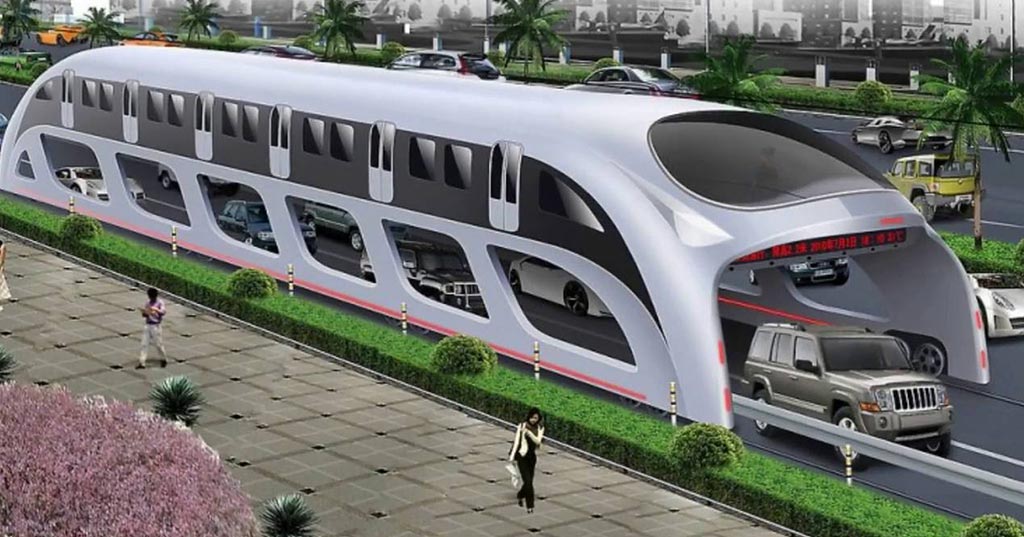
China has recently launched a prototype of an elevated bus that has the same capacity as the Airbus A340. It can comfortably accommodate 300 passengers in a super-carriage that’s 21 m long and 7,62 m wide.
But that’s not the most remarkable aspect of this behemoth of a bus. It is built to travel along fixed narrow gauge lines, straddling two existing traffic lanes. Vehicles lower that 2 metres in height can safely pass under it.
According to the developers, the Transit Elevated Bus (TEB) can reach speeds of up to 60 kph, and is powered by overhead electrical lines. At an estimated cost of just $4.5 million per bus, plus 40 kilometres of guideway, TEB is a cheap alternative to the subway.
In addition to providing an inner-city transport solution that’ll beat the traffic blues, the vehicle, which is the equivalent of 40 standard buses, is expected to save an estimated 780 tonnes of fuel, and 2,390 tonnes of carbon emissions each year.
Flying cars
© image via Aeromobil
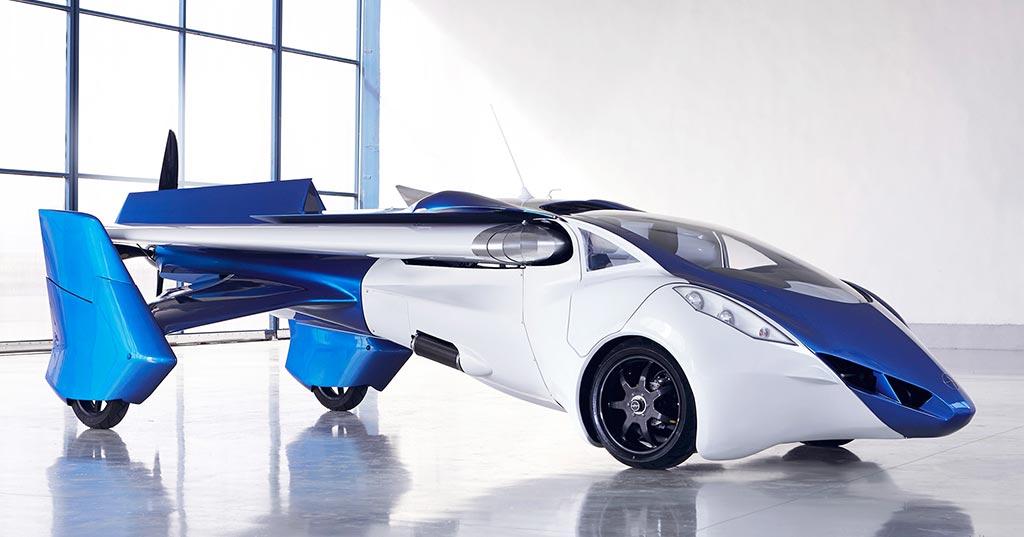
Flying cars are no longer the futuristic subjects of sci-fi novels and superhero comic books. There are several prototypes out there that are using vertical take-off and landing (VTOL) technology to advance the idea.
High flyers and the super rich are investing millions of dollars into companies focussing on the technology required to build a vehicle that is as comfortable on the roads as it is in the air. And the result is a series of flying car prototypes with catchy names such as X-Hawk, Skycar and Sky Rider.
To be successful and practical inner- and intra-city transport solutions, flying cars need to be able to land and take off in congested areas. They must also be powered by a propulsion system that is quiet enough for heavily populated areas.
One of the latest prototypes, the TF-X, is a plug-in battery-powered hybrid with a range of 800 kilometres, and is the precursor to the first fully autonomous flying car.
Autonomous monorail

© image via Motor1
Autonomous monorail that consists of lightweight two-people pods suspended from magnetic levitation tracks is already in operation in Israel. The SkyTran test track is the prototype of a personal rapid transit system that will soon be unveiled in major cities across the world.
The fully-automated system is tipped to reach speeds of 160 kph, and boasts a fuel consumption rate of 1.2 litres per 100 kilometres. Tracks are elevated approximately 7 metres above the ground, and are supported by utility poles, or attached to the sides of buildings
It’s a high-tech system that has multiple safety features built in. It can even assess commuter demand in real time, so as to increase the number of available pods at specific stations.
As the entire transit system is app-based, all you have to do is go to the nearest station and enter your destination on the app. You’ll be assigned a particular pod that’ll get you to your destination in the most direct way.
At Crown Auto Pawn, we don’t deal in the latest vehicle technologies – but we do offer a modern, convenient and safe way to secure a loan using your car, with no delays.

